


Dalberg uses cookies and related technologies to improve the way the site functions. A cookie is a text file that is stored on your device. We use these text files for functionality such as to analyze our traffic or to personalize content. You can easily control how we use cookies on your device by adjusting the settings below, and you may also change those settings at any time by visiting our privacy policy page.
Our creative potential is being wasted. Creative potential is the most precious human resource. It is the capacity for creative problem solving and the human right to co-create solutions that address the needs of your community.
Dalberg Design partners with leading organizations to bring people to the the table so they can design solutions to the challenges and opportunities that affect their day to day lives.
APPROACH
WHAT IS HUMAN-CENTERED DESIGN?
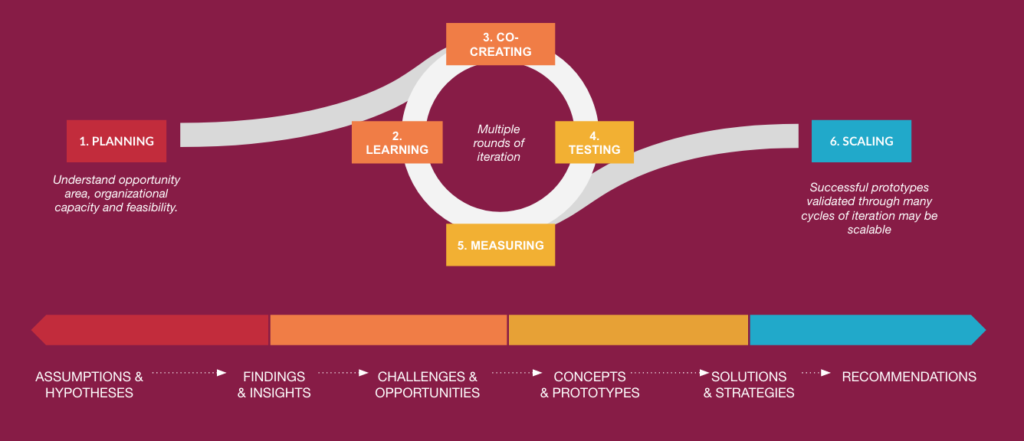
HCD is a way of thinking that places the people you’re trying to serve and other important stakeholders at the center of the design, innovation and implementation process. Our approach to HCD is iterative, measurable and results driven. We focus on understanding dynamics between stakeholders across the ecosystem. We work with stakeholders – whether end users or service providers – to create solutions and strategies that overcome challenges and develop opportunities to create value and impact. Learn more about HCD>>
AREAS OF EXPERTISE
SERVICE DESIGN
Dalberg Design uses service design methods to help organizations maintain a cohesive picture of their different touch-points with users and other beneficiaries.
Dalberg Design uses service design methods to help organizations maintain a cohesive picture of various touch-points with users and stakeholders so they can better coordinate their activities to deliver value on a consistent basis over time.
CREATIVE FACILITATION
Creative and collaborative methods help engage stakeholders and users, map out new opportunity spaces and align around new agendas, ideas and strategies.
Creative and collaborative methods help engage stakeholders and users, map out new opportunity spaces and align around new agendas, ideas and strategies.
SYSTEM MAPPING
Dalberg Design uses system thinking to generate a picture of a dynamic system – such as community health or sustainable fisheries – that reflects a common understanding of key stakeholders, relationships and feedback loops.
Dalberg Design uses system mapping helps visualize dynamic systems that reflect a common understanding of key stakeholders, relationships and feedback loops. This is critical in identifying leverage points and opportunities for collaboration.
PARTICIPATORY RESEARCH
We use on-site research methods that involve observations and deep-dive interviews, taking place in the contexts and locations in which users (and other stakeholders) live, work and interact.
We use on-site research methods that involve observations and deep-dive interviews, taking place in the contexts and locations in which users (and other stakeholders) live, work and interact.
RAPID PROTOTYPING
Rapid prototyping can accelerate the process for testing assumptions and iterating on new product, program or delivery models directly with participants.
Rapid prototyping accelerates the process for testing assumptions and iterating new product, program or delivery models. It removes risk and increases certainty by engaging users and stakeholders early and often.
PILOT IMPLEMENTATION
Pilot testing and implementation validates propositions and lowers the risk of failure for a proposed solution. Supported by the right business strategy and incentive models, pilots are an ideal way to measure business impact through small-scale experimentation.
Pilot testing and implementation validates propositions and lowers the risk of failure for a proposed solution. Supported by the right business strategy and incentive models, pilots are an ideal way to measure business impact through small-scale experimentation.
BEHAVIORAL SCIENCE
We incorporate behavioral science techniques into our HCD and prototyping approach to generate behavioral hypotheses and rigorously test ideas through experiments.
We incorporate behavioral science techniques into our HCD and prototyping approach to generate behavioral hypotheses and rigorously test ideas through experiments.
DATA ANALYTICS
We leverage big data analytics to complement qualitative research with statistically rigorous insights from market research, surveys and separate data sets, to inform segmentation, business cases and go-to-market strategies.
We leverage big data analytics to complement qualitative research with statistically rigorous insights from market research, surveys and separate data sets, to inform segmentation, business cases and go-to-market strategies.
LEAN/AGILE DEVELOPMENT
We work closely with technology development partners to implement our solutions, using rapid sprint cycles centered on user stories closely tied to our HCD research insights.
We work closely with technology development partners to implement our solutions, using rapid sprint cycles centered on user stories closely tied to our HCD research insights.
MEETING PEOPLE WHERE THEY ARE
Over the last 6 years, we’ve worked with a broad range of people, communities, and organizations. During that time we have been fortunate to work consistently with a core group of communities from around the world and develop a deeper understanding of their lives, challenges and opportunities.
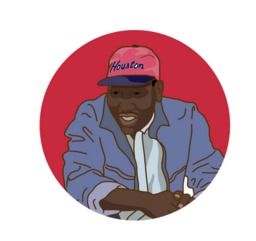
Smallholder Farmer
There are an estimated 500 million smallholder farmers in low- and middle-income countries. Smallholder farmers are underserved by critical services, which contributes to low farm productivity and other challenges. Read more >>
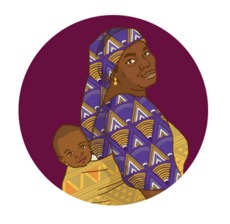
Expecting Mother
Expecting mothers struggle with access to quality information and care for their newborns. This contributes to a high number of infant deaths worldwide – as many as 2.8 million in 2013 – within the first 28 days of life. Read more >>
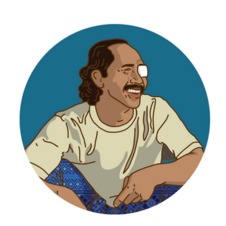
Small-Scale Fisherfolk
Ocean fisheries are in crisis. Nearly 40% of fisheries have collapsed or are overexploited, risking the livelihoods of 350 million people, the food security of nearly 3 billion, and pressuring countless species in the world’s most bio-diverse waters. Read more >>
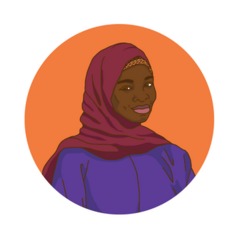
Underemployed Youth
Underemployed youth are spirited and hopeful, but discouraged and frustrated by the lack of formal job opportunities. This puts significant social, economic and emotional pressure on the millions of youth that enter the workforce each year. Read more >>
WORK
Dalberg Design works across a wide range of sectors, leveraging the rich content knowledge and expertise of Dalberg’s specialized practice areas to ensure our creative approaches and collaborations are calibrated to the complexity of these challenges:
Global Health | Financial Inclusion | ICT & Mobile for Development | Agriculture & Food Security | Sustainable Fisheries | Employment & Education | Gender Empowerment | Cities & Urban Development | Humanitarian Assistance | Energy Access | Environment | Water & Sanitation
Learn about some of our signature initiatives and programs. More at dalbergdesign.com>>
IDEAS

Can the Impact Community Afford to Sit Out Mining? Reflections from PDAC 2026
By Jeffrey Berger and Shyam Sundaram From March 1–3, we had the chance to attend PDAC, one of the largest mineral exploration and mining conventions in the world. Despite doing a lot of work in this space, it was our first time attending the conference and we found it to be a truly instructive, eye-opening and rewarding experience. From our few days there – and through many of the…
READ MORE »
Dalberg Partner Joe Dougherty on the “K-Shaped Economy”: Why Local Collaboration Matters for Good Jobs
What will historians see as the defining issue of our time? In this talk, Dalberg Partner Joe Dougherty explores the idea of the “K-shaped economy,” a growing divide in economic opportunity between different groups of people and places. While some workers and regions are thriving, many others face wage stagnation, fewer pathways to quality employment, and increasing…
READ MORE »
A New Generation of Giving: Five Philanthropic Trends We Are Watching in 2026
By Haley Grieco-Page and Julia Rohrer Funding for the social sector is clearly shrinking, and current philanthropic models cannot fill the gap. Globally, official development assistance fell to 0.21% of Gross National Income in 2025, with projections suggesting a 40-60% decrease over the next 5 years.[1] In the United States, federal cuts eliminated over 22,000…
READ MORE »
A Gender Lens Unfinished: How Gender-Blind Education Systems Fail Boys as well as Girls
In recent years, Global South education efforts have focused on improving educational outcomes for girls and this work remains essential. At the same time, emerging evidence suggests that gender-blind education systems are failing boys, in different but consequential ways. This is not a zero-sum shift away from girls. Instead, it reveals a deeper systems failure,…
READ MORE »A GLOBALLY DIVERSE TALENT BASE
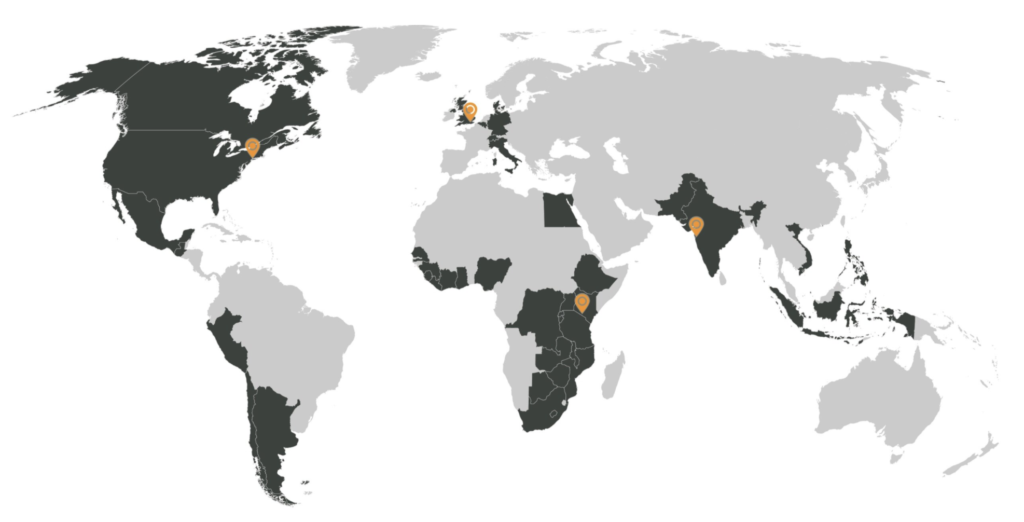
We have design studios in London, Mumbai, Nairobi and New York. Our teams have worked with communities in 43 countries on 200+ projects since 2014.
Learn more about working at Dalberg Design >>