
Dalberg uses cookies and related technologies to improve the way the site functions. A cookie is a text file that is stored on your device. We use these text files for functionality such as to analyze our traffic or to personalize content. You can easily control how we use cookies on your device by adjusting the settings below, and you may also change those settings at any time by visiting our privacy policy page.
Longer lives are one of the success stories of our time, with global life expectancy more than doubling since 1900. Though these gains have been uneven across regions, this reflects a real and significant extension of lifespans, in addition to falling child mortality. This is also part of a broader demographic transformation, in which longer lives are coinciding with falling birthrates. The result: by 2050, 1 in 6 people worldwide will be aged 65+.
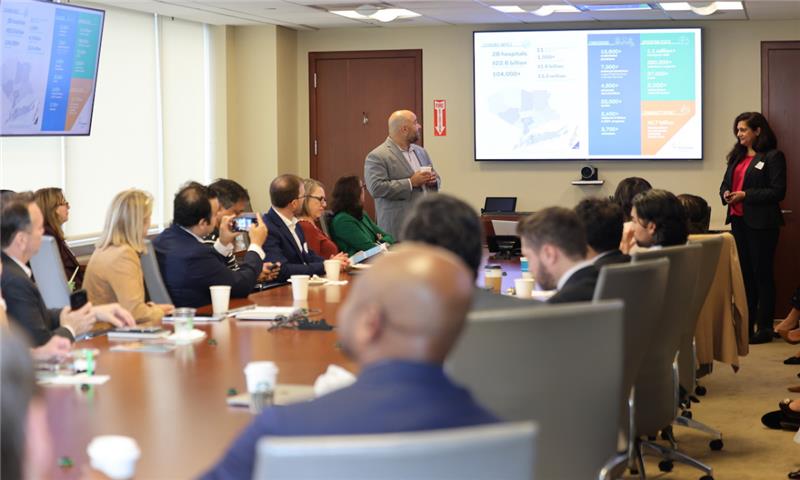
However, the full value of this progress is limited if extra years aren’t healthy, connected, and purposeful. At our recent Longevity event co-hosted by Northwell Health and Dalberg on the sidelines of UNGA80, clinicians, innovators, advocates, and investors came together to discuss a shared vision: extending not just lifespan, but healthspan – the years we live with capability and dignity.
Geriatrician and palliative physician Dr. Maria Carney framed the goal: push the aging curve upward so people stay independent longer, then compress frailty at the end of life. The conversation centered on four areas of implications and opportunities: care recipients, carers and family, health systems, and society and markets. Here’s what we heard across those layers, and what it will take to translate longer lives into a true longevity dividend.

Care Recipients: “What Matters Most”
At the heart of longevity-ready care is a simple but transformative idea: start by asking patients what matters most and let that guide every decision. At its core, this principle recognizes that good care is not just about managing diseases, but aligning medical decisions with an individual’s values, goals, and priorities. This is especially critical for older patients living with multiple conditions, where aggressive interventions may prolong life but compromise dignity, independence, or comfort. As one story illustrated, honoring a patient’s goals can guide whether to pursue aggressive treatment or focus on comfort and connection in the time that remains. By asking “what matters most,” clinicians can design care plans that preserve function and quality of life, rather than defaulting to procedures or protocols.
And this applies across the life course: for a young adult managing a chronic condition, for a parent balancing treatment with family responsibilities, or for mid-life adults navigating preventive care. In each case, centering care on personal goals builds trust, improves adherence, and ensures that health systems support people in living the lives they value.
We need to measure success by function, independence, and alignment with patient goals—not by how many procedures we do.
Carers: Family at the Center of the Care Team
Family members are often the backbone of long-term care, yet their role is too often overlooked in how care is planned and delivered. Panelists emphasized bringing family caregivers into the plan from the start—identifying the primary caregiver, sharing access to information, and connecting them with training and respite.
The reality is that caring can come with heavy burdens. Caregivers are at higher risk of stress, burnout, and financial strain, with knock-on effects for their own health and employment. Globally, women shoulder the majority of unpaid care, which limits labor force participation and deepens economic inequality. In many countries, the value of unpaid care equates to a significant share of lost GDP, yet it is rarely recognized.
Simple moves can ease some of these pressures, lowering readmissions and stress. Existing efforts include embedding social work in clinics, creating hospital-based caregiver centers, and enabling proxy access to electronic records. Policy tailwinds are emerging, but design still lags: if a care plan requires many uncoordinated tasks across specialties, it fails the household running it. Supporting caregivers is not just compassionate, it is essential infrastructure for a longevity-ready society.
Health Systems: From Reactive Episodes to Proactive, Home‑First Care
Leaders from Northwell described a shift already underway: more care at home. This includes telehealth as connective tissue, and multidisciplinary teams that manage multimorbidity over time rather than single diseases in 15‑minute visits.
Speakers underscored that this shift is producing results. For example, hospital-at-home programs have shown they can deliver acute care safely in living rooms rather than hospital wards, reducing complications and increasing patient satisfaction. Community paramedicine was also highlighted as a way to prevent avoidable ER visits by treating common issues in place. These models demonstrate that proactive, home-first approaches can keep people healthier and reduce strain on overstretched emergency departments.
What makes these examples powerful is that they combine the best of technology and human support: remote monitoring, telehealth, and AI-enabled triage layered onto new workforce roles like care coordinators and community health workers. While real challenges around health system culture and payment models need to be addressed, these examples point toward a future where primary care evolves into an essential core of the system, managing multimorbidity over time and keeping people functioning in their homes and communities.
If we don’t evolve primary care, the emergency department becomes the default.
Society & Markets: Realizing the Longevity Dividend
Older adults are a growing source of direct economic contribution. AARP’s research shows the “silver economy” already drives an outsized share of consumption. In the US, Americans aged 65+ were responsible for the largest share of consumer spending among all age groups (22%) in 2023, growing from the smallest share in 2010. Meanwhile, many older adults are also extending their work lives. This means longevity is expanding the pool of skilled labor, especially if workplaces adapt to older workers’ needs.
These societal shifts also create new opportunities for investment and jobs. Longevity creates demand for novel diagnostics, therapeutics, digital health platforms, and assistive technologies that sustain independence. And investors are increasingly taking note, as longevity-linked technologies are becoming mainstream growth markets. Beyond health, there’s a further opportunity for age-friendly housing, transport, and financial products designed with usability and trust-by-default. And increased long-term care needs will mean new demand for workers in facilities and care networks.
As participants noted, this dividend isn’t automatic. Urbanization, ageism, and shrinking family networks can turn longer lives into a care crunch. The remedy is an “age‑friendly ecosystem” that enables and empowers older adults to participate fully. And maintaining connection and social interaction is a potent contributor to wellbeing and good health.
A Practical North Star
One theme through every layer of the conversation was connection. Connection between patients and the clinicians who listen to what matters most. Connection between families and the systems that recognize their role as caregivers. Connection between older adults and the communities, technologies, and workplaces that enable them to remain engaged and purposeful. Longer lives without connection risk becoming fragmented and isolating; longer lives with connection create meaning, health, and resilience.
Longevity-ready societies are those that weave connection into every layer of design. That means embedding social participation and intergenerational exchange in community life, making data and care portable so patients don’t fall through cracks, and investing in environments that keep people mobile and socially engaged. As one participant noted, “connection is medicine.” It is a common factor across clinical, economic, and social domains, and the lever that can turn longer lives into better lives.
Lily Chhatwal
Principal, Dalberg Advisors
Laura Herman
Partner, Dalberg Advisors
Henry Koster
Associate Partner, Dalberg Advisors
Related Articles