

Dalberg uses cookies and related technologies to improve the way the site functions. A cookie is a text file that is stored on your device. We use these text files for functionality such as to analyze our traffic or to personalize content. You can easily control how we use cookies on your device by adjusting the settings below, and you may also change those settings at any time by visiting our privacy policy page.
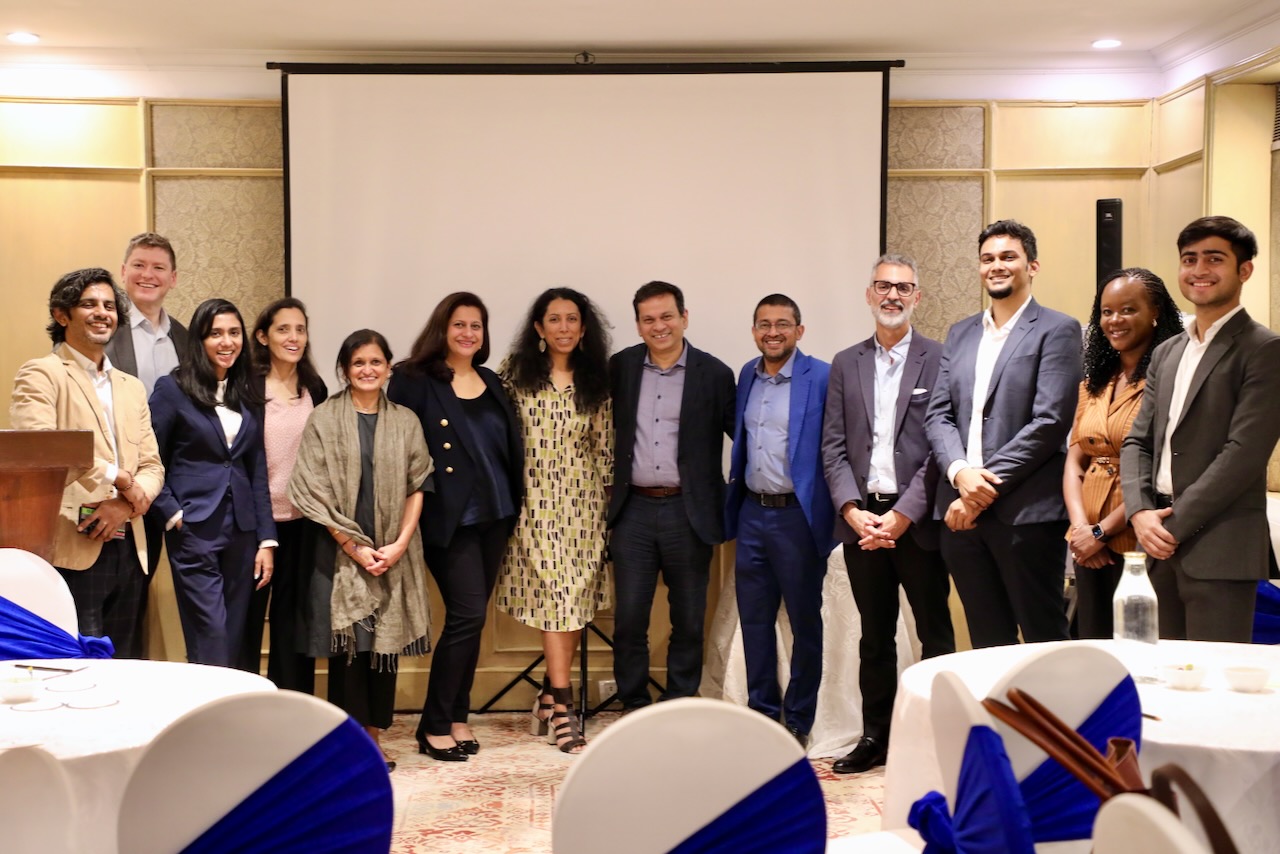
New Delhi, 16 February 2026: A coalition of partners led by Dalberg, Medtronic Labs and BRAC convened at the India AI Impact Summit to outline ideas for AI-enabled healthcare delivery in low- and middle-income countries (LMICs).
The event brought together Asif Saleh, CEO, BRAC; Ruchika Singhal, President, Medtronic LABS; and Gaurav Gupta, Global Managing Partner, Dalberg Advisors among other stakeholders for discussions that centered on how AI can be leveraged to improve primary healthcare systems at scale.
Healthcare systems in LMICs face a number of challenges such as severe shortages of physicians in rural areas, overworked primary healthcare workers, a lack of health data, and poor infrastructure. On the other hand, growing digital public infrastructure, ambitious commitments to achieve universal health coverage, and a number of successful AI-enabled health pilots in LMICs suggest that the gaps in healthcare delivery can be bridged by leveraging tech.
At the end of the workshop-style discussion, stakeholders laid out their vision of how the various problems of healthcare systems can be addressed, taking Bangladesh as an example. For instance, building LLMs that can effectively change health-seeking behavior by nudging patients to visit physicians well before their condition becomes serious; reducing the administrative burden on doctors and primary heath-workers expected to provide care and document data by building simple voice to text tools, and providing community health-workers self-training tools.
“One of the challenges we face in the primary healthcare system is that people don’t want to go to doctors until it’s too late,” said Asif Saleh. “And when that happens, the economic burden that the family faces is a huge shock, and that gets people back into poverty. One of the fundamental challenges that we want to solve is how to prompt people at the right time so that people seek support before it becomes too late. We simply can’t build enough hospitals; we have to stop people from going to hospitals.” He added that, “Tech or AI is going to make sure that people working in overwhelming situations actually have more enhanced tools so that they can work more effectively. That’s the power of the tech.”
“If we are serious about transforming primary healthcare at scale, we have to move beyond pilots and beyond silos,” said Ruchika Singhal. “No single organization — whether an innovator, an implementer, a funder, or a policymaker — can do this alone. Real leapfrogging will only happen when we align technology leaders, delivery platforms, governments, and capital around a shared, interoperable vision for impact. Collaboration is not a nice-to-have; it is the foundation that makes scale possible.”
“Much of today’s AI in healthcare is incremental, layered onto legacy systems that were never designed to be intelligent or interoperable. LMICs have a rare opportunity to build AI-first health infrastructure from the ground up, with Bangladesh offering a compelling sandbox to leapfrog structural constraints,” said Gaurav Gupta. “What makes this partnership compelling is the opportunity to bring frontier LLM capabilities and leading digital technology providers together with Medtronic LABS’ applied innovation and BRAC’s large-scale delivery platform to build a shared, interoperable foundation for AI-enabled healthcare for LMICs.”
Press Contact:
- Jacqui Hocking, M: +65 84545945
- Pronoti Datta, M: +919821932723
- press@dalberg.com
About Dalberg Advisors
Dalberg Advisors is a global professional services firm that puts impact at the center of decision-making.
Founded in 2001, Dalberg Advisors now has over 450+ full-time staff spread across 29 global locations, bringing global perspectives to local solutions for over 1600 clients.
This includes local and international NGOs, governments, financial institutions, philanthropies and business leaders; and entities that sit at the intersections of these organizations.