Dalberg uses cookies and related technologies to improve the way the site functions. A cookie is a text file that is stored on your device. We use these text files for functionality such as to analyze our traffic or to personalize content. You can easily control how we use cookies on your device by adjusting the settings below, and you may also change those settings at any time by visiting our privacy policy page.
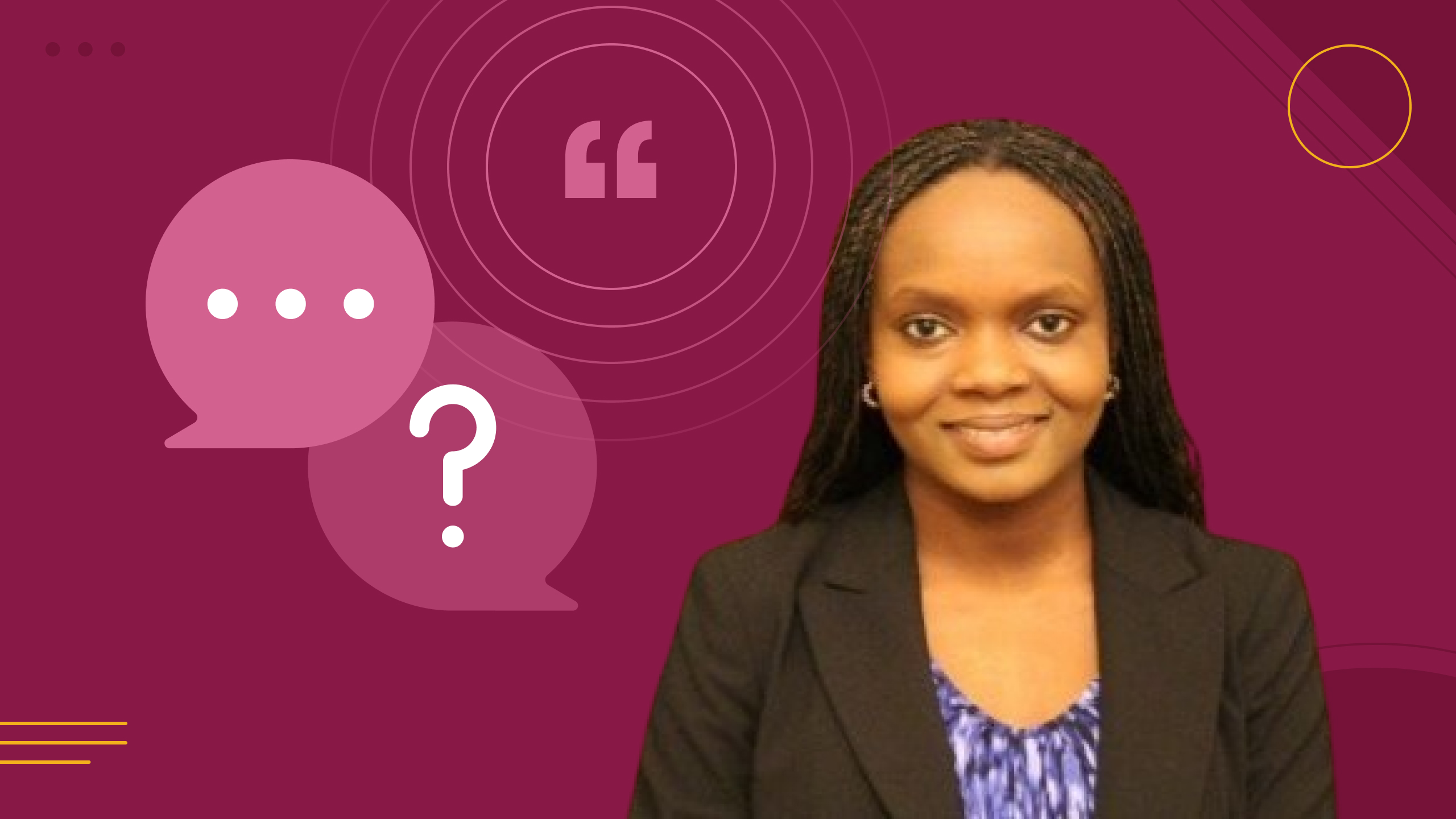
“To truly scale Africa’s climate transitions, we need patient capital, cross-sectoral partnerships, and innovative finance facilities. That includes carbon finance that reaches last-mile communities, blended finance vehicles that don’t just de-risk investments but also create value for communities, and better-aligned donor, corporate, and government collaborations.”
Grace Njunge is a strategist and systems thinker at the intersection of sustainability, technology, and finance, helping shape solutions that drive inclusive development across the Global South. As an Associate Partner at Dalberg Advisors in Nairobi and former Global Chief of Staff for the firm, she brings a uniquely global and operational lens to her work with leading development institutions, philanthropic funders, and governments.
Her portfolio spans renewable energy, agriculture, and financial inclusion, often with a focus on mobilizing capital and scaling innovations. Grace has led pioneering work on clean cooking in East Africa. Her recent article “Beyond the Stove: What It Will Take to Make Ethanol the Future of Clean Cooking” explores the systemic challenges and opportunities in replacing traditional fuels with cleaner alternatives.
In this conversation, Grace shares what it will take to move beyond pilot programs and rhetoric to design real-world, scalable solutions that serve both people and the planet. From financing models to policy shifts and behavioral change, she helps us rethink clean cooking not as a product challenge, but as a systems one.
Grace, you’ve led a number of climate and energy access initiatives across Africa. What keeps you committed to this space?
My work has always centered on a belief that climate action and human development must go hand in hand. What drives me is the urgency, and the opportunity, to help shape systems that can deliver both. In practice, that means moving beyond reports and frameworks and into designing real-world financial tools and policies that unlock capital at scale.
For example, I was part of a Dalberg team that supported the African Development Bank in structuring a $500 million debt fund for small-scale renewable energy providers across Africa. We built a financial model to forecast fund returns under various macroeconomic conditions and designed the fund’s investment policy guidelines used to raise and allocate capital. The aim was simple but powerful: accelerate investment in projects that wouldn’t otherwise access financing, including mini-grids and off-grid solar developers, while ensuring long-term financial sustainability.
That kind of work, where financial innovation meets inclusive development, is what keeps me motivated.
You’ve worked extensively on clean cooking. Why is this such an important issue, and how do carbon markets fit in?
Clean cooking is often overlooked in global climate and health conversations, but it is one of the most urgent areas of intersectional impact. Every year, millions of women and children are exposed to harmful household air pollution because of cooking with biomass and kerosene. It is a public health crisis, and it is also a gender, climate, and energy access issue rolled into one.
Last year I worked with Kenya’s Ministry of Energy, the Clean Cooking Alliance, and GIZ to analyze Kenya’s carbon market landscape for clean cooking. Our work mapped out how carbon credits could be generated, verified, and sold, and what needs to change in policy and infrastructure to support market readiness.
I also recently designed and delivered a carbon markets training in Freetown, Sierra Leone, for stakeholders from government, private sector, and development partners. The training balanced foundational overviews with technical insights, covering topics such as introduction to carbon finance, benefits of clean cooking, and unlocking Article 6.2 markets. It was a vivid example of how capacity building and cross-sector collaboration can shape real investment pathways.
Carbon finance, if structured correctly, could radically shift the viability of clean cooking enterprises across the continent. But it must be underpinned by strong governance, equitable benefit sharing, and real demand.
You’ve also worked on investment mobilization across sectors, including agriculture and health. What lessons are you carrying forward from that work?
One clear lesson is that capital doesn’t move without clarity about risk, return, or regulation. Whether we’re talking about renewable energy, primary healthcare, or agricultural infrastructure, funders and developers alike need ecosystems that de-risk entry and align incentives.
In Angola, DRC, and Zambia, I led a team assessing investment opportunities across energy, agriculture, and digital health. We mapped gaps in electricity access along the Lobito Corridor, including mines that primarily rely on diesel-powered generators, and identified investable opportunities in off-grid solar, mini-grids, and transmission. At the same time, we proposed ways to leverage the rail corridor to accelerate trade and services in the region.
It was a powerful reminder that capital flows are not only shaped by return potential but also by cross-sectoral collaboration to de-risk investments.
What is the role of advisors like Dalberg in accelerating climate-aligned investment into Africa?
At Dalberg, we don’t just offer strategy, we often act as translators between global capital and national priorities. Our role is to help our clients including governments, philanthropies, or private investors to design solutions that are not only fundable, but feasible and sustainable within the systems they operate.
One project that stands out is our work with the UK Foreign, Commonwealth and Development Office to promote private sector trade and investment in Kenya’s renewable energy market. We convened actors from across the energy value chain including project developers, investors, policy makers, and manufacturers and facilitated deep conversations on how to build a pipeline of investable deals. We tackled everything from regulatory bottlenecks to investor incentives, helping to align different players around a shared agenda for scaling renewable energy access in Kenya.
That’s a clear example of what Dalberg brings to the table; the ability to convene the right mix of actors, surface actionable insights, and design practical mechanisms to move from aspiration to implementation.
Looking ahead, what do you believe it will take to truly scale Africa’s climate transitions?
We need three things: patient capital, cross-sectoral partnerships, and innovative finance facilities. That includes carbon finance that reaches last-mile communities, blended finance vehicles that don’t just de-risk investments but also create value for communities, and better-aligned donor, corporate, and government collaborations.
I’m especially excited about the emerging nexus between climate, health, and food systems, areas where Africa is seen not just as a vulnerable recipient of aid but also as an innovative and investable continent.
Grace Njunge
Associate Partner, Dalberg Advisors
Related Articles