Dalberg uses cookies and related technologies to improve the way the site functions. A cookie is a text file that is stored on your device. We use these text files for functionality such as to analyze our traffic or to personalize content. You can easily control how we use cookies on your device by adjusting the settings below, and you may also change those settings at any time by visiting our privacy policy page.
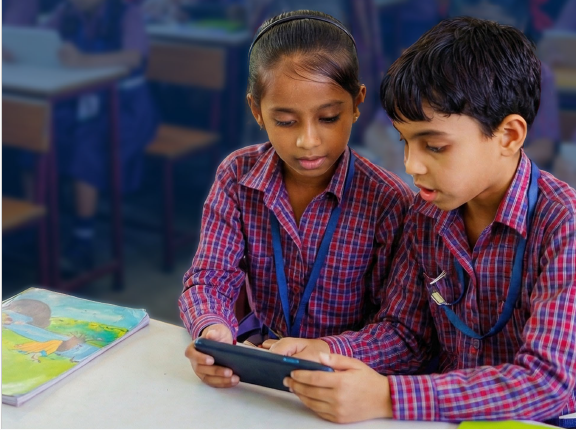
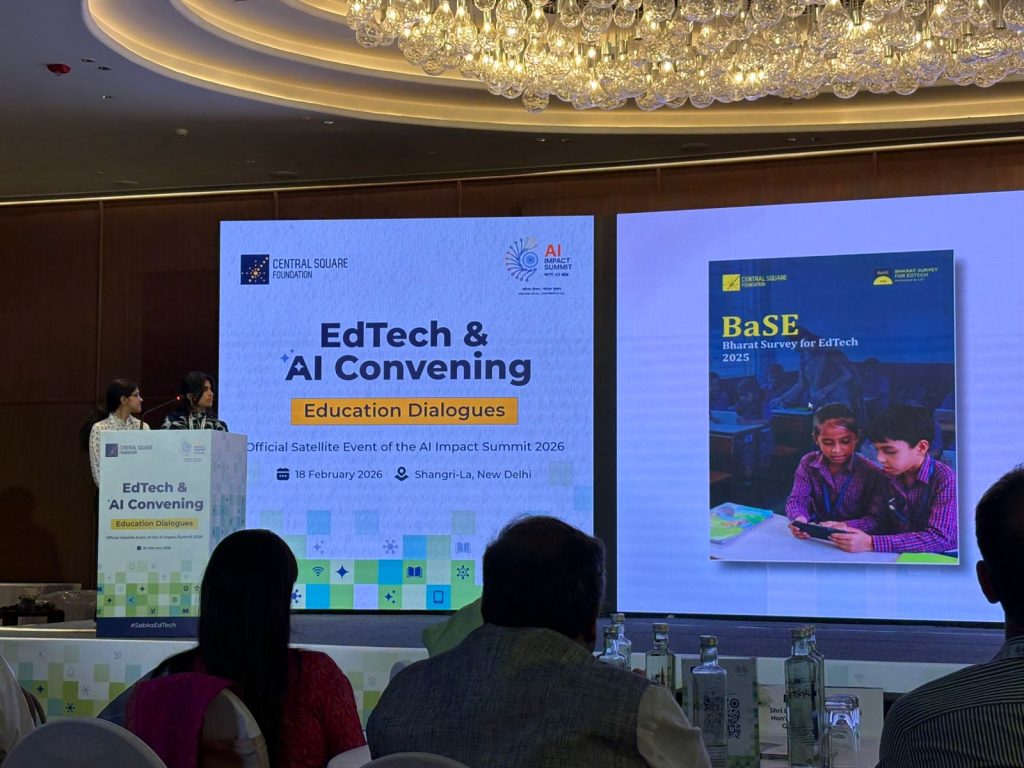
The Bharat Survey for EdTech (BaSE) 2.0, facilitated by the Central Square Foundation in collaboration with Dalberg as the Technical Partner and Research Lead, is the second round of a multi-state study examining how technology is shaping teaching and learning across India. The survey report was launched on February 18th at the India AI Impact Summit 2026. Building on the 2023 edition, BaSE 2.0 retains a focus on children’s access, usage, and perceptions of EdTech, while expanding to include teachers’ perspectives and the rapid rise of Generative AI (GenAI) in education. As smartphones become nearly ubiquitous and AI tools enter homes and classrooms, the conversation is shifting from access to effective, safe, and meaningful use.

BaSE 2.0 aims to:
- Provide a data-backed understanding of who is using EdTech and GenAI, how, and for what purposes.
- Identify barriers to adoption, including awareness, access, skills, and safety concerns.
- Examine differences across gender, age, and rural–urban contexts.
- Surface enabling conditions, such as training, parental support, and guidance, that shape effective use.
- Inform ecosystem dialogue and policy on strengthening digital readiness in education.
The study surveyed 12,500 households and 2,500 teachers across 10 Indian states: Gujarat, Kerala, Madhya Pradesh, Maharashtra, Mizoram, Odisha, Tamil Nadu, Telangana, Uttarakhand, and Uttar Pradesh. In addition, 120+ teachers, parents, and children participated in qualitative focus group discussions to deepen insights into usage patterns, perceptions, and risks.
The findings showed that smartphone-based EdTech is mainstream but not universal. Awareness and capability gaps persist, usage differs in depth and diversity, and while risk awareness is high, confidence is low in the ability to manage the concerns. As India’s EdTech ecosystem enters a new phase with increased access, the priority now is strengthening readiness, ensuring that teachers and learners have the skills, literacy, safeguards, and support needed to translate technology use into improved learning outcomes.
Read the full report to know more.

Dayoung Lee
Partner & Global Co-lead of the Education to Employment Practice, Dalberg Advisors

Vismit Bansal
Associate Partner, Dalberg Advisors

Petra Sonderegger
Senior Advisor, Dalberg Advisors
Related Articles