
Dalberg uses cookies and related technologies to improve the way the site functions. A cookie is a text file that is stored on your device. We use these text files for functionality such as to analyze our traffic or to personalize content. You can easily control how we use cookies on your device by adjusting the settings below, and you may also change those settings at any time by visiting our privacy policy page.
Álvaro Bernal, Shyam Sundaram, Tania Beard, & Marcus Haymon | Dalberg Advisors
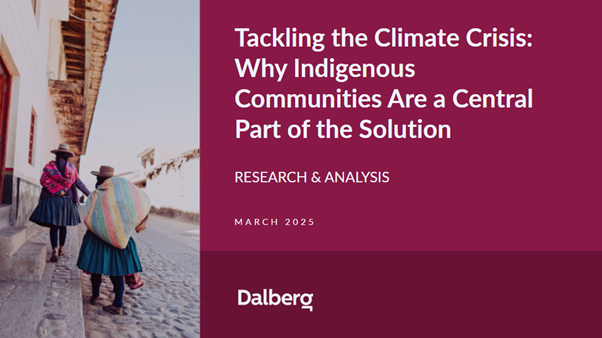
Responding to the climate crisis is more urgent than ever. In 2024, record-breaking temperatures triggered deadly heatwaves, droughts, wildfires, storms, and floods, displacing and killing thousands.[1] As global heat intensifies, world leaders have pledged $300 billion annually to climate efforts by 2035; however, estimates suggest nearly three times this amount is needed.[2] With each passing year, the scale of intervention required grows exponentially, making swift action critical.
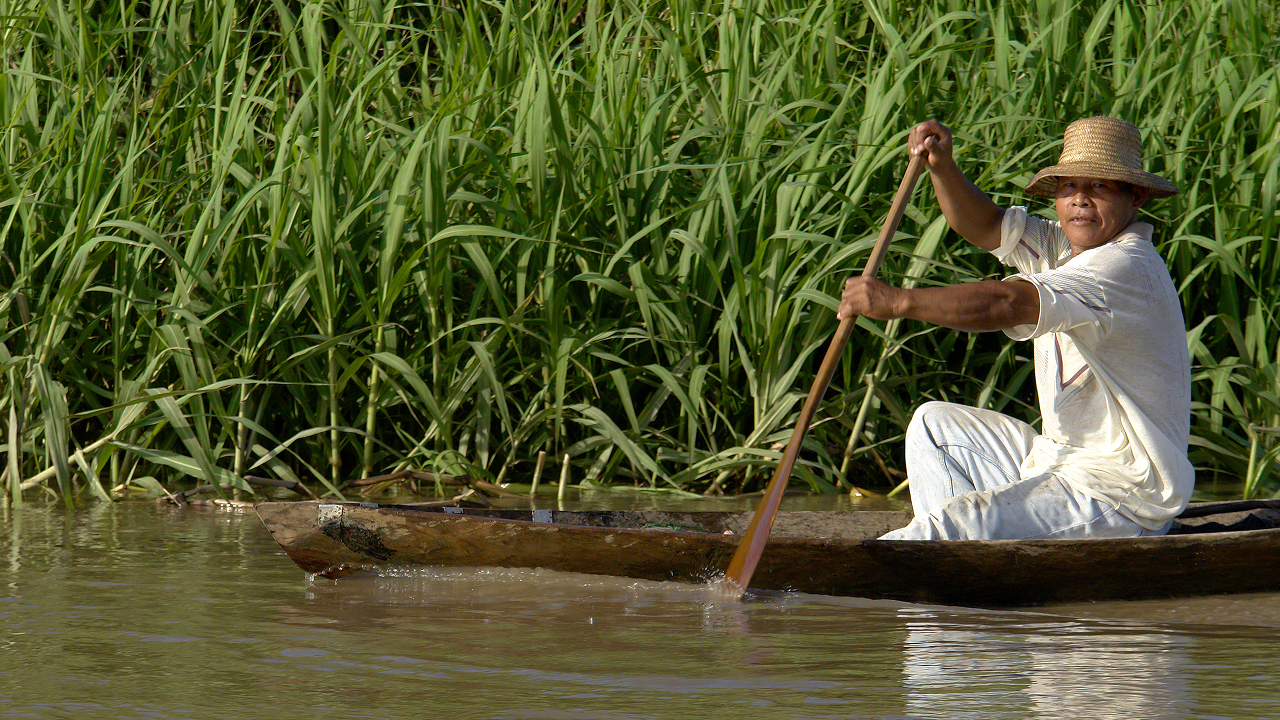
One of the most effective, yet overlooked, climate solutions already exists—Indigenous communities. They safeguard most of the world’s biodiversity and manage nearly a quarter of its forests,[3] making them essential allies in climate action. In Latin America alone, 58 million Indigenous people (~8% of the population) manage 22% of the land, preserving more than half of the region’s remaining forests.[4]
Despite their critical role, Indigenous communities receive little support and face systemic exclusion. Representing just 6% of the global population, they account for 19% of those living in extreme poverty,[5] and face lower life expectancy, reduced access to basic services, limited political participation and decision-making, and threats to their land rights.[6] Weak land tenure security leaves Indigenous lands vulnerable to displacement, exploitation, and environmental destruction while reinforcing existing inequalities and exclusions. According to the Rights and Resources Initiative, less than 1% of land across most Latin American countries was formally recognized to be owned by Indigenous peoples, exposing vast areas to land grabs, deforestation, and resource extraction.[7] Yet, when Indigenous land tenure is recognized, deforestation rates can drop by up to 66%, strengthening the protection of water sources, wildlife, and broader ecosystems.[8] In Brazil alone, illegal land invasions on Indigenous territories surged by 135% between 2018 and 2021, leading to devastating environmental and social consequences.[9]
To better understand the current support for these challenges, Dalberg conducted an analysis[10] of funding flows to Indigenous communities in Latin America. Our findings reveal that while these communities play a vital role in protecting their lands and ecosystems, they often lack access to the resources needed to sustain and scale these efforts. This piece explores key insights from our analysis and shares how philanthropy can partner with Indigenous-led organizations to change this reality.
Realignment is Needed to Direct More Funds to Indigenous Communities
Despite their essential role in safeguarding the planet’s ecosystems, Indigenous communities struggle to access the funding needed to formalize and protect their lands. Our research identifies three key challenges preventing them from receiving adequate support.
Indigenous Rights Funding is Scarce and Declining
Between 2018 and 2024, funding for Indigenous rights in Latin America dropped by 77%, dropping by more than $50 million. Even though Indigenous Rights initiatives received more than $400M in philanthropic funding in that time period, less than 0.24% of this investment went specifically to land titling efforts, which give Indigenous communities the agency to protect their lands from environmental and climate threats.[11] This trend will likely continue as shifts in global priorities and geopolitical factors, including cuts to U.S. foreign aid and potential reductions to Indigenous rights support,[12] further reduce available funding.[13]

Funding is Not Reaching Indigenous Communities Directly
Even when funding is available, Indigenous-led organizations often do not receive it directly. While 81% of grants in Latin America go to organizations based in the region, these grants are, on average, three times smaller than those awarded to Global North-based organizations. As a result, almost half of the total funding is flowing through large international intermediaries based mainly in the United States. Barriers—including strict eligibility criteria, administrative burdens, and limited access to donor networks— hinder grassroots Indigenous groups in Latin America from securing the resources needed to lead and scale their own solutions.

Indigenous Land Rights Are Not a Funding Priority
Although Indigenous communities are key actors in protecting land and ecosystems, support for their land titling efforts is often overshadowed by broader initiatives. More than 50% of Indigenous rights funding in Latin America is allocated to climate change, environmental rights, and human rights projects—indicating that support often comes from cross-cutting initiatives rather than through efforts that strengthen Indigenous land governance. However, organizations focused specifically on land titling struggle to compete for resources, as donors prioritize large-scale conservation and environmental initiatives over direct investments in co-creating land tenure solutions with Indigenous communities. While approximately $2.8 billion in philanthropic funding was invested in climate mitigation and conservation in Latin America, only 16% was directed toward Indigenous rights initiatives—and less than 0.1% supported land titling efforts[14].

How Funders and Grantees Can Realign Priorities and Bolster Indigenous Land Protection
As widely acknowledged by development practitioners, international organizations, and philanthropic actors, there is a pressing need to transform how philanthropy engages with Indigenous-led organizations. Our research echoes and strengthens this call to action. By forging authentic, long-term partnerships with Indigenous communities, philanthropy can help co-create lasting climate mitigation and resilience strategies. With increased direct and flexible support, Indigenous peoples can defend their territories, preserve biodiversity, and drive innovative climate solutions. This isn’t just impactful—it’s one of the most cost-effective pathways we have. For grantees, aligning their missions with funder priorities can unlock new resources and amplify their community-led impact.
Philanthropy Can Lead the Way by Adopting an Indigenous Rights Lens in How it Plans and Implements its Climate Efforts by:
- Funding Indigenous-led organizations directly whenever possible and investing in capacity building to strengthen their ability to manage and execute grants over time, ultimately reducing reliance on intermediaries.
- Adopting trust-based and flexible models that provide multi-year, unrestricted funding that directs resources where they are most needed and reduces administrative burdens. This would enable Indigenous-led organizations to advance their missions with greater autonomy, invest in long-term innovative strategies, and adapt to evolving challenges.
- Targeting support to organizations based in underserved areas with high Indigenous populations and proximity to conservation hotspots to ensure resources reach communities most critical to climate and biodiversity efforts.
- Prioritizing land titling within broader climate and conservation strategies to strengthen Indigenous leadership in environmental stewardship and ensure that Indigenous communities have the tools to protect their territories from further degradation.
Grantees Can Strengthen their Ability to Engage Funders and Secure Resources More Strategically for Land Titling by:
- Emphasizing the intersectionality of indigenous rights and land titling with other key issues (e.g., climate change). This can help better position and align their initiatives with donor priorities, expanding access to funding pools focused on climate resilience and biodiversity conservation.
- Building partnerships with larger organizations, which can enhance credibility and access to funding while maintaining a strong community-led approach.
While realigning funding priorities will help bolster Indigenous land protection, many Indigenous and community-led organizations are navigating complex donor landscapes where administrative demands, compliance expectations, and shifting priorities can limit their ability to lead. Aligning with climate or conservation agendas can unlock new resources. But doing so effectively requires support structures that respect their missions and amplify their voices. With the right backing, these organizations can be well positioned to lead and drive impact on their own terms.
Click to see how funders and grantees are making a difference—from investing in Indigenous-led solutions in Latin America, to forging partnerships to protect critical ecosystems like the Amazon rainforest.
Shyam Sundaram
Global Operations Partner, Dalberg Advisors
Marcus Haymon
Partner and Regional Director for the Americas, Dalberg Advisors
TANIA BEARD
Associate Partner, Dalberg Advisors

ÁLVARO BERNAL
Associate Program Director, Dalberg Advisors
Related Articles